
The First Unexpected Legal Victory
The court rejected the request to remove the videos: “He knew he was being recorded”
On August 18, 2020, Archbishop Isidoros filed an application for interim relief against “Google Ireland Ltd” for the deletion of two videos from the “YouTube” platform containing excerpts from his historical testimony.
On 27 May 2022, the Decision was issued. It was an unexpected victory. The first.
I quote the last pages with the reasoning for the dismissal.
However, the aforementioned video, which depicts the applicant’s face and features the aforementioned dialogue (which, it should be noted, is not detailed in the application), leads to the easy inference that, within the scope of this trial, the applicant’s claim regarding the infringement of his personality rights concerns the disclosure of his face and the fact that, due to the dental problem he was experiencing, he is presented as an unserious person, as he alleges. It is not probable that this infringes the applicant’s personality rights. Specifically, it has not been established that the recording of the said video occurred in a manner that portrays the applicant as someone who does not treat his office with due seriousness.
Nor is it probable that the applicant is presented as an unserious person due to his dental problem. Furthermore, it is even less probable that the said journalist was filming the applicant without his consent.
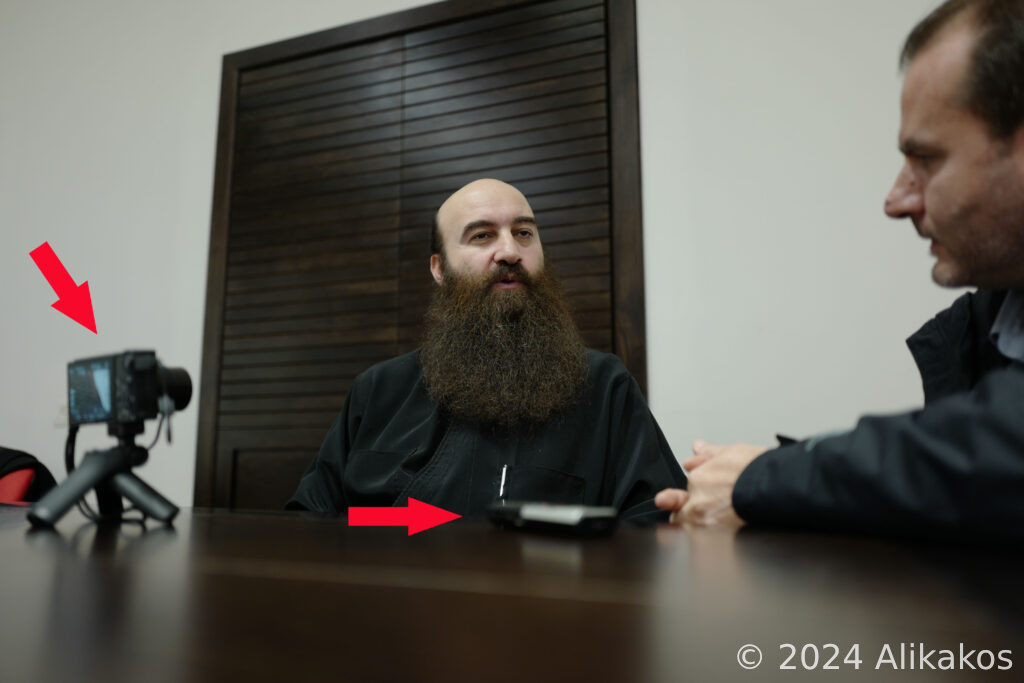
On the contrary, the fact that the applicant spoke directly to the camera and asked the journalist, “Should we say this on camera?” shows that he knew he was being filmed, contrary to what he claims in his application.
Based on the above, in the Court’s judgment, there is no legal reason to issue the interim relief of provisional regulation of the situation against the respondent, in its aforementioned capacity, inasmuch as no infringement of the applicant’s personality rights is probable in this case, and, even more so, the unlawful nature of this through filming without his consent is not probable. Therefore, the application under consideration must be dismissed as unfounded on the merits. As the unsuccessful party, the applicant must be ordered to pay the respondent’s legal costs (Article 176 of the Greek Code of Civil Procedure).FOR THESE REASONS
Adjudicates the case in the presence of both parties.
Dismisses the application.
Orders the applicant to pay the court costs of the respondent, which it sets at the amount of three hundred (300) euros.